
December 1, 2025
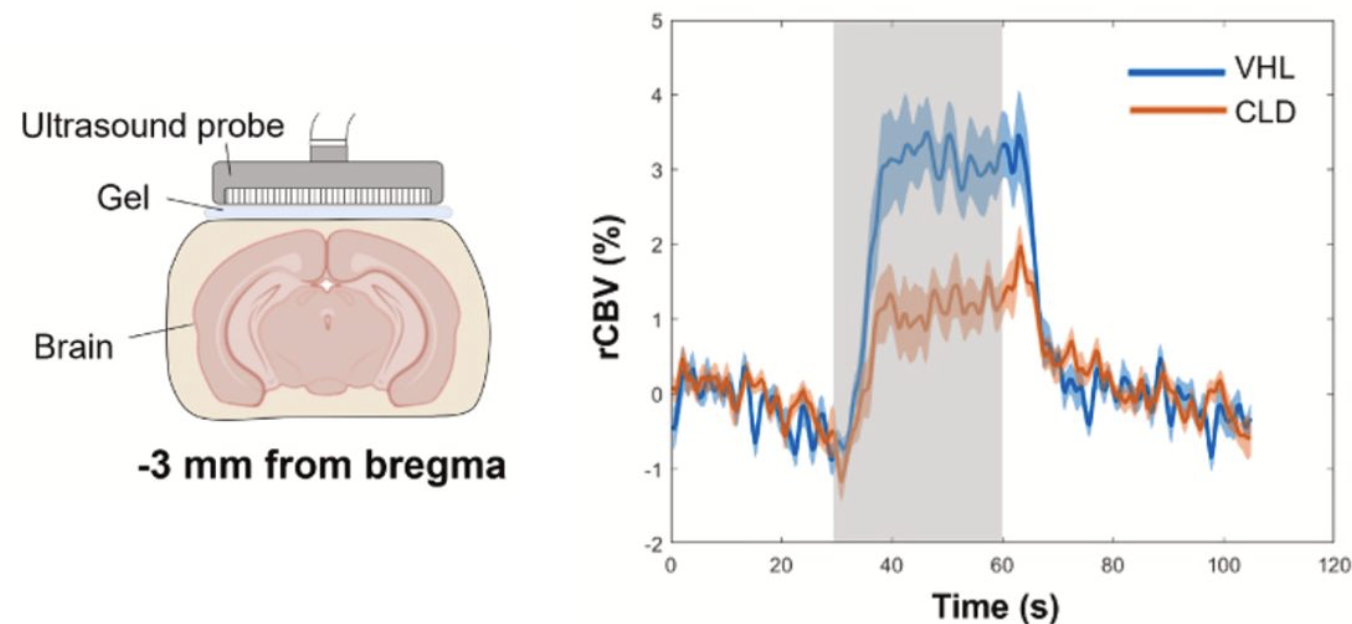
Chlordecone is a persistent organochlorine pesticide that remains an important environmental health issue, particularly in the French Caribbean. Its acute neurotoxicity is well documented, but much less is known about the functional consequences of longer-term exposure.
In this collaborative study with ANSES, mice were exposed to chlordecone for eight weeks and characterized using behavioral tests, biochemical analyses and functional ultrasound imaging (fUSi). Chlordecone was found to accumulate throughout the brain, but most classical readouts were only mildly affected: behavior was largely preserved and the dopaminergic system showed only very subtle degeneration.
The fUSi results were more obvious. During visual stimulation, exposed mice showed a reduced hemodynamic response in several visual cortical areas, while cerebral blood volume responses to whisker stimulation and dopaminergic stimulation were not significantly altered. As impaired visuospatial processing and visual contrast sensitivity have been reported in epidemiological studies of children exposed to chlordecone, our experimental results may provide a neurobiological context for such observations.
Another methodological insight is that functional ultrasound imaging may reveal early or subtle neurotoxic effects before they become obvious in behavior or standard biochemical measurements. This study therefore suggests a possible new application of fUSi in neurotoxicology: “toxico-fUSi/toxico-fUS”?